
Climate and Resilience
Climate change increases the frequency and intensity of extreme weather. In Baltimore City, natural hazards, ranging from coastal storms and flooding to extreme heat, already disrupt modern life. How can we prepare ourselves as these weather events grow more severe?
To address this question, the City of Baltimore aims to mitigate the impacts of climate change by focusing on climate resilience.
Understanding Climate Resilience
So, what is climate resilience?
Climate resilience refers to the ability of our community to anticipate and positively adapt to changing climate conditions or hazard events. By building climate resilience into planning efforts and ongoing projects, we can identify vulnerabilities and determine solutions ahead of time. When disaster strikes, Baltimoreans will be ready to weather the storm.
Resilience planning is instituted across five key areas:
- Health and Wellbeing: Making sure people have access to healthcare, mental health support, clean water, food, and shelter—especially during emergencies. It also means preparing public health systems to handle future crises.
- Infrastructure: Building and maintaining strong systems—like roads, buildings, power, and water—that can survive disasters and bounce back quickly when problems happen.
- Environment: Protecting nature and using resources wisely. This includes reducing pollution, managing natural resources carefully, and keeping green spaces healthy to help protect against things like floods and extreme heat.
- Economy and Society: Supporting jobs, businesses, and communities so they can adapt when things change. This means helping people stay employed, making sure support systems are in place, and creating opportunities for everyone—not just a few.
- Leadership and Policy
Having strong leaders, clear rules, and good communication. This helps communities prepare for challenges, respond quickly, and recover more effectively.
Climate Resilience in Baltimore
The Baltimore Office of Sustainability addresses climate resilience as a key component in many of its plans, such as the Sustainability Plan, Climate Action Plan (CAP), and Disaster Preparedness Plan (DP3).
Additionally, check out the Community Resiliency Hubs Program for more on how the City of Baltimore is advancing preparedness through community-centered initiatives.
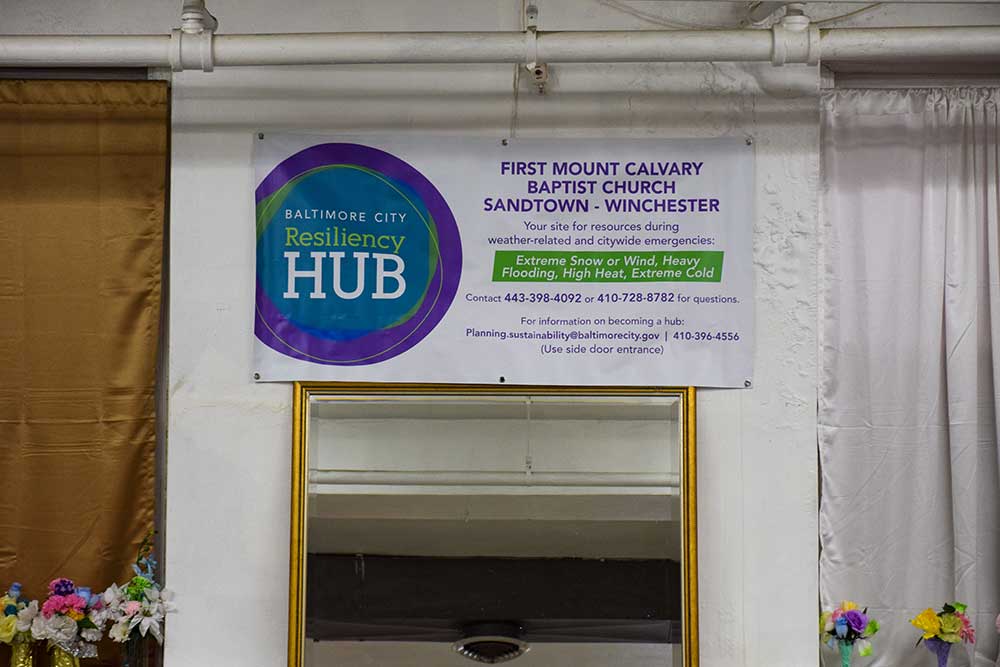
A Baltimore City Community Resiliency Hub (CRH) poster hangs at First Mount Calvary Baptist Church, a similar banner highlights each CRH location as being a resource for extreme weather. (Photo by Maya Pottiger | University of Maryland)
In other areas of the city, floating wetlands help to reduce the impact of coastal flooding while cleaning the Inner Harbor watershed. Whereas green roofs and cool roofs work to cool commercial and residential properties on hot days. Solar panels protect community spaces during outages and strengthen the energy system.