
Baltimore City is committed to Carbon Neutrality by 2045.
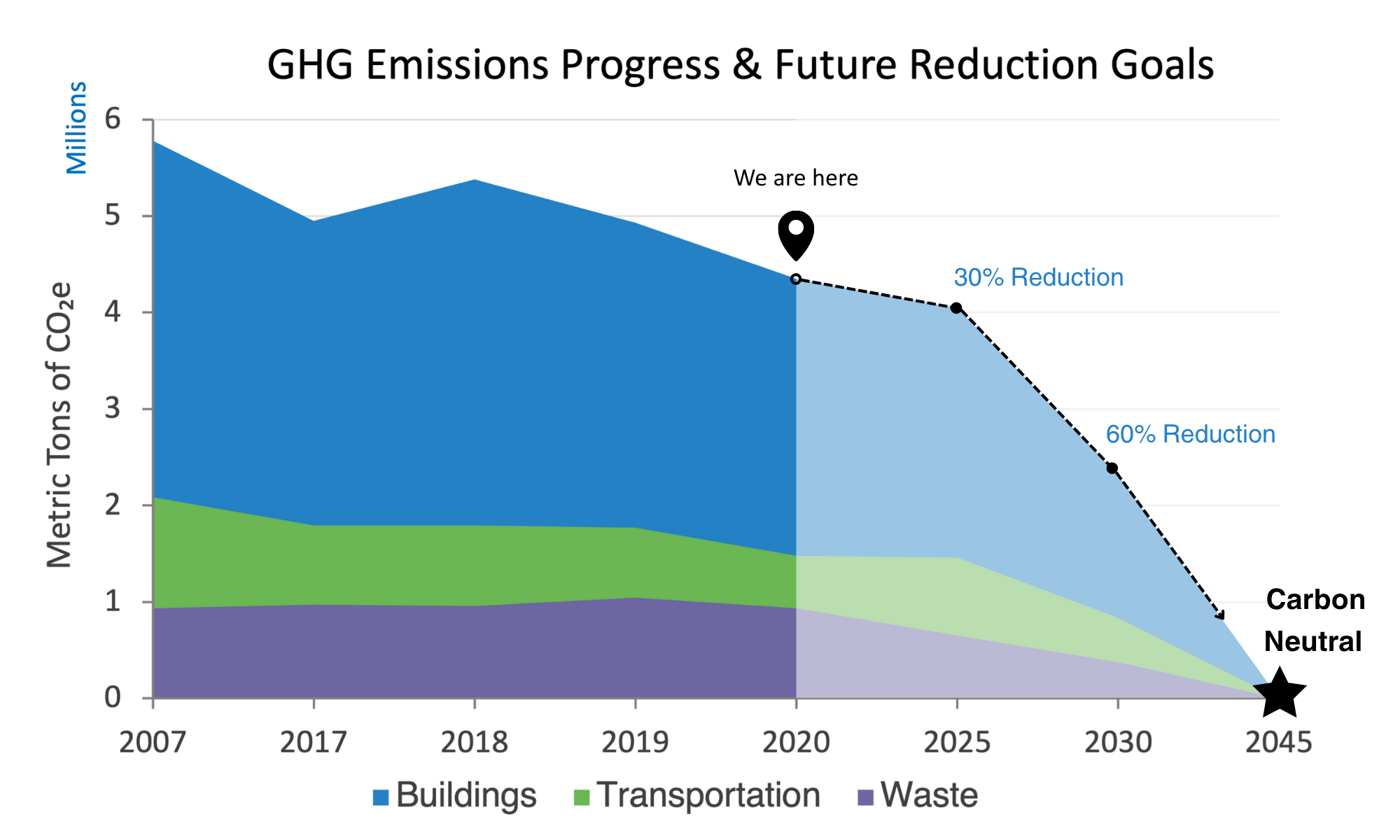
To achieve this goal, Baltimore’s Climate Action Plan (CAP) identifies three key greenhouse gas (GHG) reduction targets: a 30% reduction by 2025, a 60% reduction by 2030, and complete carbon neutrality by 2045.
The Department of Environmental Health and Engineering at Johns Hopkins University has been tracking Baltimore's citywide greenhouse gas emissions since 2007. The most recent Greenhouse Gas Emissions Inventory Report, published in 2020, provides updated emissions trends across major sectors, highlighting the City's progress and identifying where more action is needed.
Citywide GHG Trends
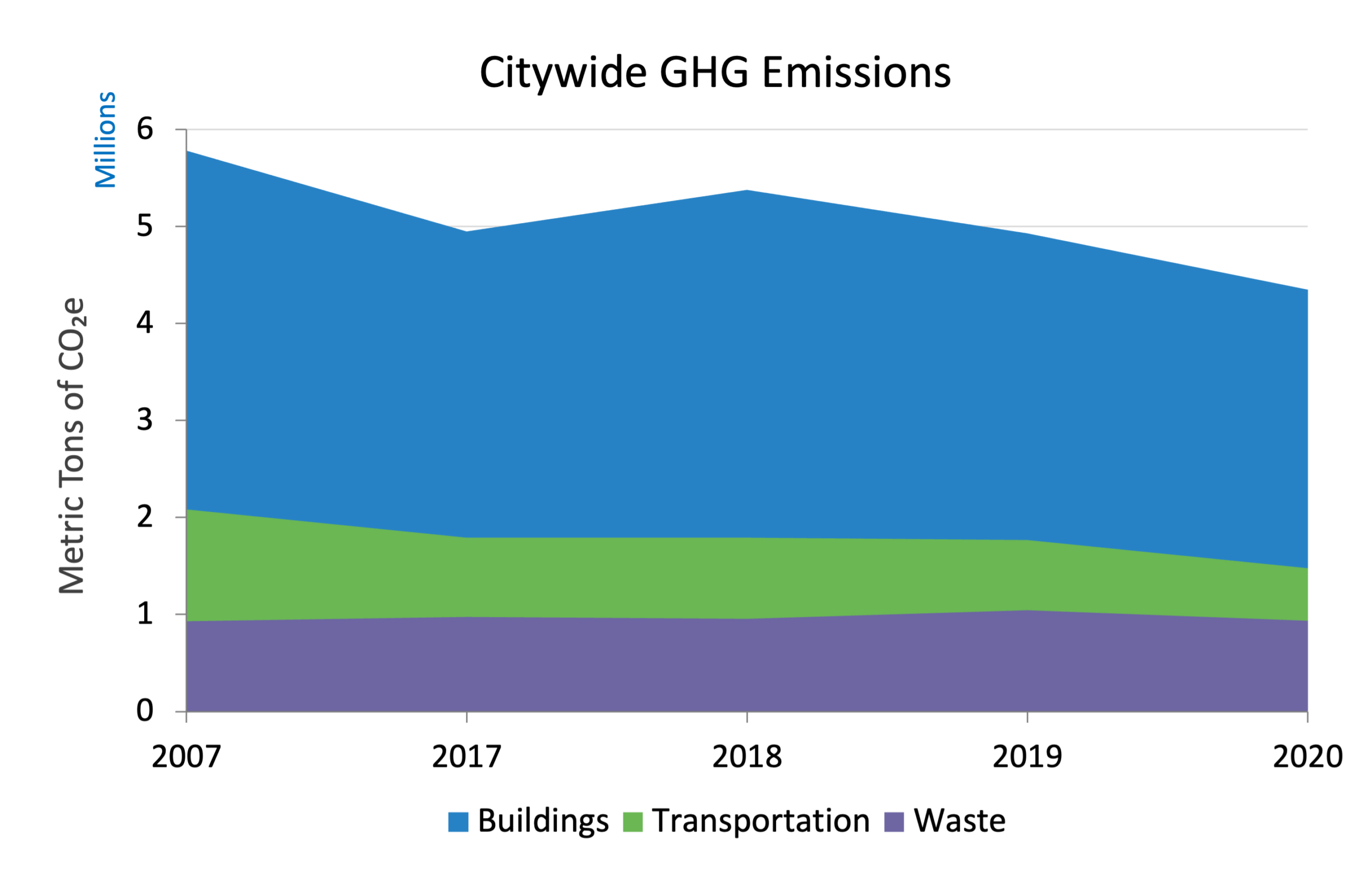
→ Since 2007, Baltimore has reduced its citywide greenhouse gas (GHG) emissions by 23%.
→ Building emissions have dropped by 24% from 2007 to 2020, yet remain the City's top GHG source.
→ The year 2020 is considered an outlier due to the COVID-19 pandemic, marked by a reduction in transportation emissions.
GHGs by Sector

→ In 2020, Baltimore City produced 6,759,180 tons of CO2 equivalent.
→ The building sector made up 64% of these emissions, followed by transportation (23%) and waste (13%).
→ Over 60% of electricity used to power buildings is produced from burning fossil fuels, such as coal and natural gas.
Future GHGs
Building on greenhouse gas (GHG) emissions trends from 2007 to 2020, achieving carbon neutrality by 2045 will require a steep decline in emissions. Visualizing the GHG reduction pathway from beyond 2020 illustrates the pace of climate action needed to meet benchmark targets and long-term goals.
→ Carbon neutrality is a 100% reduction in net GHG emissions- meaning the emissions we release into the atmosphere are balanced with the amount we remove from the atmosphere.
→ To achieve the long-term goal of carbon neutrality, Baltimore City must cut emissions significantly and invest in carbon removal initiatives.
The 2023 Annual Sustainability Report provides up-to-date information on our current initiatives, progress on the Baltimore Sustainability Plan, and future considerations. Ongoing climate and resiliency efforts aim to reduce greenhouse gas emissions.
Current City Initiatives
Decarbonizing City Vehicles
In 2023, Mayor Scott signed City Council Bill 21-0159, mandating that all City administrative vehicles be emission-free by 2030. In response, agencies are transitioning to electric vehicles (EVs), which produce no direct greenhouse gases and are expected to decrease long-term operational costs.
Solar Powered Resiliency Hubs
Through the Baltimore Community Resiliency Hub Program, the City partners with non-profit organizations to provide essential resources, support, and space for the community to gather. Currently, there are 17 resiliency hubs throughout the city. Currently, a major priority of the program is to support the integration of solar power and battery storage systems for the resiliency hubs.
Sustainable Food Systems
Baltimore City signed the Glasgow Food Declaration, a commitment by local governments to address climate change through sustainable food systems.
Further Reading:
Greenhouse Gas Inventories
Climate Plans